

Why a standard vacuum does more harm than good in a data center, and what HEPA, ULPA and ESD-safe actually mean.
A standard commercial vacuum collects the large debris you can see and exhausts much of the fine dust you cannot see straight back into the room. In an office that hardly matters. In a data center, that fine dust is exactly what you are trying to remove.
HEPA filtration
A true HEPA filter captures at least 99.97% of particles at 0.3 µm — the size that is hardest to filter. Larger and smaller particles are captured even more efficiently. This is the baseline for any vacuum used in white space.
ULPA filtration
ULPA filters go further, capturing 99.999% of particles at 0.12 µm. They are used in the most sensitive areas and for work such as zinc whisker remediation, where the particles being removed are especially harmful.
ESD-safe construction
Dust moving at speed through a plastic hose builds up static charge. An ESD-safe vacuum uses static-dissipative hoses and tools and a grounding path, so that charge drains away safely instead of discharging into the nearest metal surface — which, in a data center, may be a cabinet full of equipment.
The rest of the kit
- Backpack HEPA vacuums for overhead trays and cabinet tops
- Low-lint, microfiber and cleanroom wipes
- Neutral, residue-free cleaning solutions approved for the space
- Suction tile lifters for raised floors
- A calibrated laser particle counter to measure the result
Need help with your facility?
We clean data centers and critical spaces across Northern Virginia, Washington, DC and Maryland, to a written scope with documented results.
More articles
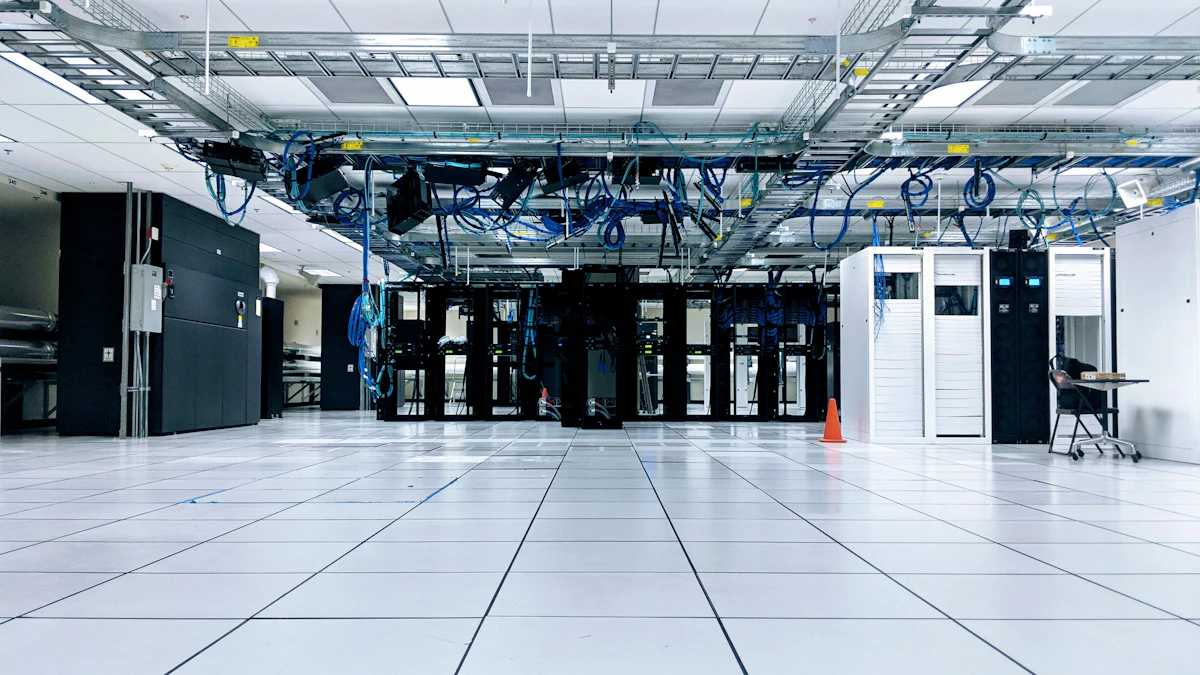
Maintenance · October 20, 2026
How Often Should a Data Center Be Cleaned?
A practical cleaning schedule for data halls, subfloors and overhead areas — and how particle counts tell you whether the interval is right.
Read article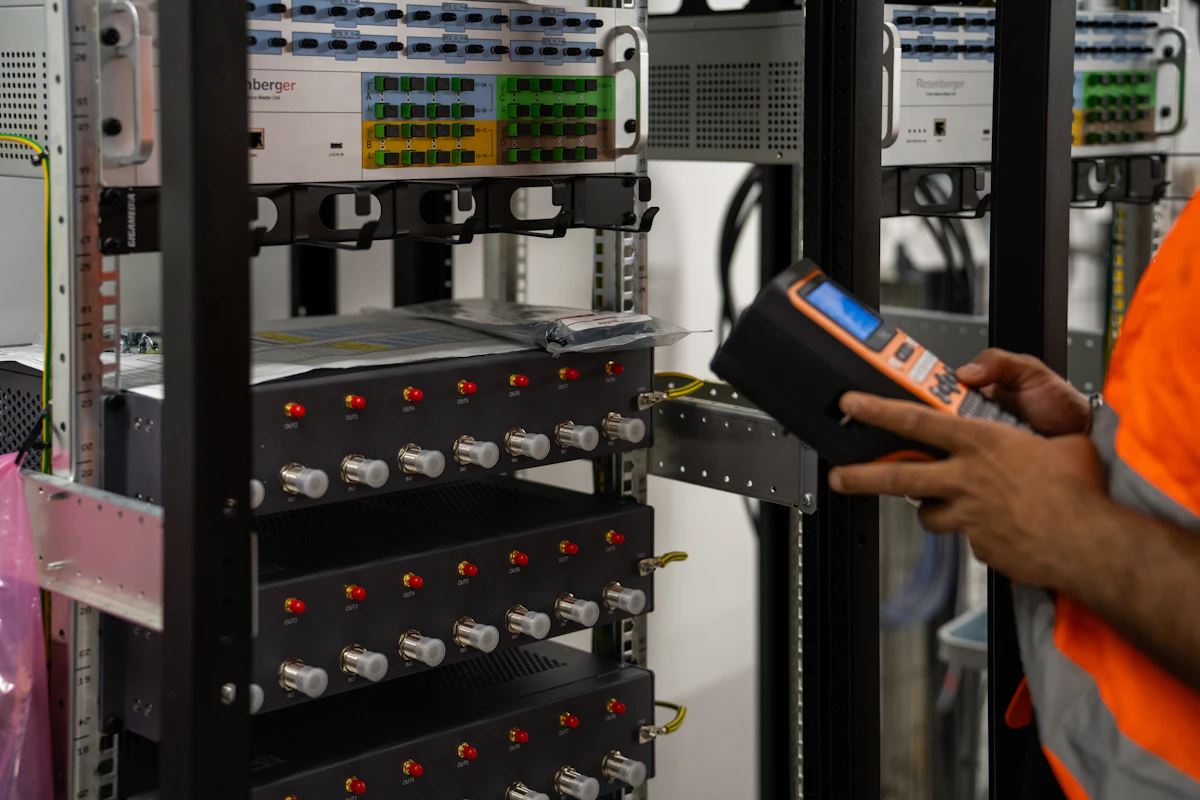
Standards · October 14, 2026
ISO 14644-1 Class 8, Explained for Data Center Managers
What the ISO 14644-1 cleanliness classes measure, why Class 8 is the usual target for data centers, and how a particle count is carried out.
Read article
Contamination · October 7, 2026
Zinc Whiskers: What They Are and How to Find Them
Zinc whiskers grow from some electroplated steel used in older raised floors and ceiling grids. Here is where to look and what to do if you find them.
Read articleDiscuss your facility’s requirements
Tell us about the space, the scope you have in mind and your access windows. We will come back with questions, a walkthrough date or a proposal.